Compare SAR levels
Google Pixel 9 Pro 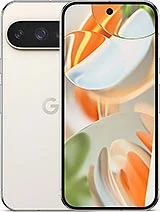 |
|---|
| Head SAR, cellular only (US) |
| 1.13 |
| Body SAR, cellular only (US) |
| 0.99 |
| Hotspot SAR, cellular only (US) |
| 0.85 |
| Head SAR, Wi-Fi + cellular (US) |
| 1.59 |
| Body SAR, Wi-Fi + cellular (US) |
| 1.59 |
| Hotspot SAR, Wi-Fi + cellular (US) |
| 1.59 |
Important note about SAR
SAR (specific absorption rate) is the reported test value, in W/kg, from FCC equipment authorization filings. This page compares the six U.S. measurements in the dataset: head, body, and hotspot, each for cellular only and for Wi-Fi plus cellular. It is a compliance figure, not a complete picture of everyday exposure. Values can vary with signal conditions, accessories, and usage. The dataset is hosted on this site; it is a copy of the RF Safe SAR Compare file, not a live request to another server.
Important SAR information
SAR numbers are a red herring
The Specific Absorption Rate (SAR) figures on this page come from a heating test. That standard is a red herring. It pulls attention toward one heating number and away from the large body of evidence for biological effects that occur without heating. A passing SAR value is not a finding of safety.
In the United States, the Federal Communications Commission (FCC) limit is 1.6 watts per kilogram, averaged over 1 gram of tissue. The FCC adopted it in 1996 to prevent tissue heating. Heat is the only effect the limit was written to prevent.
The test leaves a gap, in place since the FCC’s 1996 rules, built around 1990s belt clips and holsters. FCC Knowledge Database publication 447498 D01 lets the manufacturer choose a body-worn test separation distance of not more than 2.5 centimeters (25 millimeters) to support “off-the-shelf body-worn accessories” such as “belt-clips and holsters for cellphones.” Phones used on the body without those accessories are supposed to be tested at no more than 5 millimeters. People carry phones in pockets, against the body. In 2019 the FCC’s own laboratory tested popular phones at 2 millimeters. Reports released on September 29, 2023 under a Freedom of Information Act (FOIA) request show the limit was exceeded, including 5.2 watts per kilogram for an Apple iPhone 7 at the back of the body, more than three times the limit. The FCC said the phones met the limit at 5 millimeters and called the 2-millimeter results “inconsistent with FCC practice.”
Europe has already dropped the gap. Commission Implementing Decision (EU) 2026/2003 adopts EN 50566:2017/A2:2025, which measures body SAR at 0 millimeters, direct contact. The older reference that allowed a gap is withdrawn on March 7, 2028.
On August 13, 2021, in Environmental Health Trust v. FCC, the U.S. Court of Appeals for the D.C. Circuit found the FCC’s decision to keep its 1996 limits “arbitrary and capricious” for failing to explain evidence of “negative health effects unrelated to cancer.” The court sent the rules back. In 2026, Children’s Health Defense, Environmental Health Trust and others asked the same court (case No. 26-1121) to order the FCC to comply. That September the FCC opened a comment period due October 22, 2026. Separately, the U.S. Department of Health and Human Services (HHS) opened a 30-day request for information (docket HHS-OASH-2026-0397), due October 21, 2026.
The U.S. Food and Drug Administration (FDA) took down detailed cell phone safety pages in late 2025 and early 2026. An HHS spokesperson called their content “old conclusions.” An archived page had said the data “show no categorical proof of any adverse biological effects other than tissue heating.” The FDA’s main cell phone page still says the evidence “has not linked cell phone radio frequency radiation with any health problems.” Those statements conflict.
A World Health Organization (WHO)-commissioned systematic review of animal cancer studies (Mevissen et al., 2025, 2026 correction) rated the evidence as high certainty for gliomas and for heart schwannomas in male rats. A companion review of male fertility in animals (Cordelli et al., 2024, 2025 correction) rated a reduced pregnancy rate as high certainty. The U.S. National Toxicology Program (NTP) earlier found “clear evidence” of malignant heart schwannomas in male rats.
Members of the International Commission on Non-Ionizing Radiation Protection (ICNIRP), the private group that writes the international heating-based limits, are authors of WHO-commissioned reviews. Ken Karipidis, ICNIRP Vice Chair since July 2024, was lead author of WHO’s human cancer review. Martin Röösli (Commission, 2016–2024) wrote or led three of the reviews. Carmela Marino (Commission, 2012–2024) co-wrote the fertility and pregnancy reviews. A 2026 Korean rat study found the same rare heart tumor in 2 of 70 exposed rats and in none of 70 sham-exposed or 70 cage-control rats; the difference was not statistically significant (Kim et al., 2026). The Korean principal investigator and last author, Young Hwan Ahn, joined the ICNIRP Commission in July 2024.
ICNIRP’s independence has been criticized in peer-reviewed literature. Hardell (2017) wrote that ICNIRP is a private organization, that many of its members have ties to industry, and that five of the six members of a WHO core group drafting a radio-frequency monograph were affiliated with ICNIRP, which he called a serious conflict of interest. Hardell and Carlberg (2021) wrote that ICNIRP acknowledges only heating effects “despite a large number of reported nonthermal effects.” The International Commission on the Biological Effects of Electromagnetic Fields, in Environmental Health (2022), concluded that the assumptions underlying the FCC’s and ICNIRP’s exposure limits “are invalid and continue to present a public health harm.”
The table on this page ranks phones under a heating test with a manufacturer-chosen gap. It does not show that a phone is safe in a pocket. It does not measure effects that occur without heating.